Community guide · Denver metro
How to test your Denver home for radon
Here is how to run a radon test in your Denver home. A mail-in kit is the first step CDPHE describes, then what a result near 4.0 pCi/L means, and when a monitor helps.
Reviewed for accuracy against EPA and Colorado Department of Public Health and Environment guidance on September 23, 2026.
On this page
Should I test?
Zone 1 describes the county. The kit describes your Denver home.
Denver County is EPA Zone 1, which means the map predicts a county average above 4.0 pCi/L. That is a planning map, not a reading for your Denver home. CDPHE says about half of Colorado tests come in above 4.0. Age does not exempt your Denver home.
Radon is a soil gas. It enters through slab cracks, the sump, and floor joints because your home sits at lower pressure than the ground. The year built does not decide your level. A mail-in kit is how CDPHE says you should start.
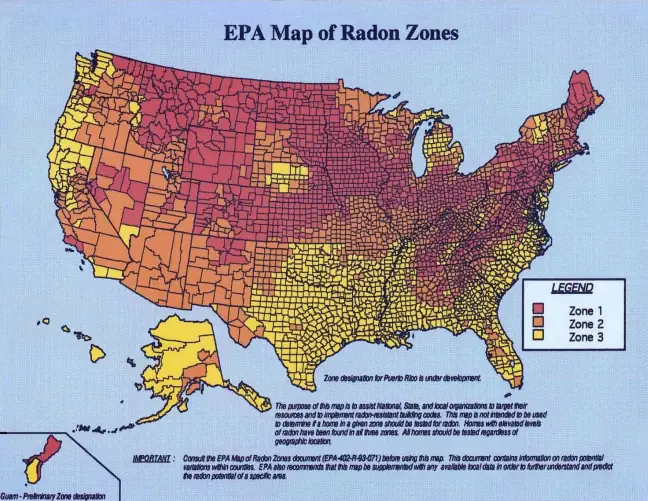
- Denver · Zone 1
- Adams · Zone 1
- Arapahoe · Zone 1
- Jefferson · Zone 1
- Douglas · Zone 1
- Boulder · Zone 1
- Broomfield · Zone 1
- Larimer · Zone 1
- Weld · Zone 1
- El Paso · Zone 1
EPA's June 2024 county designations. Every metro county here is Zone 1, a predicted county average, not a reading for your address. See the EPA map for the rest of Colorado.
EPA: fix your home at 4 pCi/L or higher, and consider fixing between 2 and 4. A kit that lands on that line needs a follow-up before you buy a fan.
How a kit works
A short-term kit screens. A long-term test confirms.
CDPHE lists two kinds of test on its testing page:
- Short-term: about 48 to 120 hours, usually charcoal. Close your Denver home 12 hours first.
- Long-term: 91 days to a year, the better picture of your yearly average.
If you live there, start with a short-term kit in the lowest room you use. If you are buying, CDPHE wants a licensed professional and a continuous monitor. Full steps are on the how-to-test page.
Borderline results
A number near 4.0 is a maybe. Confirm before you buy a fan.
EPA’s action level is 4.0 pCi/L. At or above it, fix your Denver home. From 2 to 4, consider it. There is no safe level. EPA’s own example: two short tests averaging 4.1 still leave about a 50 percent chance your yearly average is under 4.
Near the line, watch a continuous monitor for a few weeks, then confirm with a second short test or a long-term test. If the confirmed number stays at or above 4.0, call a Colorado-licensed mitigator, not another gadget. The monitor page compares the tools.
If it stays high
Sealing helps a system. It is not the system.
If a follow-up stays at or above 4.0, CDPHE says a mitigation system is the fix: a fan and pipe pull soil gas from under the slab and vent it above the roof. Sealing cracks supports that system but does not replace it, because you cannot find and close every path.
CDPHE’s published range for a Colorado system is about $1,000 to $2,000. Get more than one bid. Colorado requires a DORA license to measure or mitigate for someone else, so look anyone up at the license lookup. American Radon Systems installs in Chicagoland, not Denver. Retest about every two years, and after a remodel.
Buy or get a kit
Where to get a test kit
CDPHE free kit
One free kit per household per year, while supplies last. If the order form is empty, ask your local public health agency.
Order from CDPHEStore kit or discounted state kit
CDPHE says store kits run about $10 to $50, and it sells discounted kits too. Follow the instructions or the result does not count.
Read CDPHE’s kit FAQLicensed measurement for a sale
CDPHE suggests a licensed professional, around $150, for a real estate test. Look the license up at DORA. This guide does not list companies.
DORA radon professionalsA monitor after a borderline Front Range kit
The link does not apply this discount. Add the monitor to your cart and enter your name and shipping. After those are in the cart, type ARS10-10OFF at checkout. Airthings takes 10% off.
Use a monitor when a Denver kit lands near 4.0 pCi/L and you want the weeks a charcoal average misses. It is not the licensed measurement CDPHE wants for a sale. American Radon Systems does not install in Denver.
-
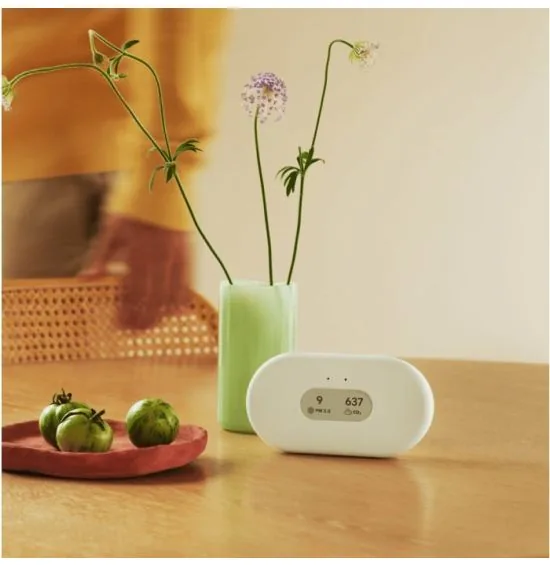 View Plus Wi-Fi monitor for the whole air picture, not radon alone. You can check your home from a phone. Measures: Radon, particulates, CO2, chemicals, humidity, temperature, air pressure Shop the View Plus
 -
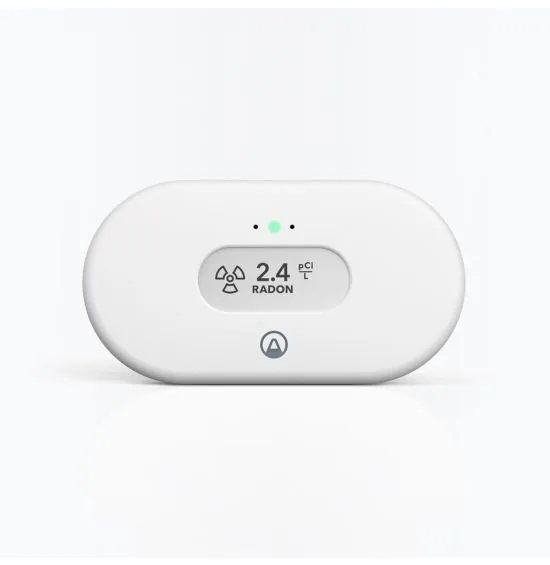 View Radon The radon-focused Wi-Fi sibling of the View Plus. Humidity and temperature come along. The extra air sensors do not. Measures: Radon, humidity, temperature Shop the View Radon
 -
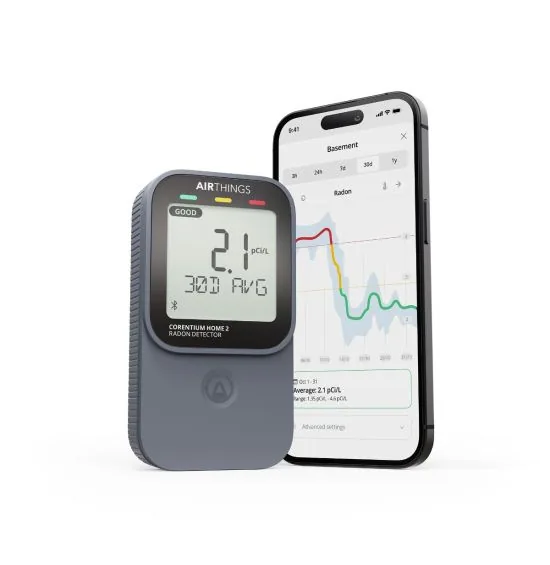 Corentium Home 2 A battery unit that talks to a phone over Bluetooth when you are near it. Easy to carry from the basement to a bedroom. Measures: Radon, humidity, temperature Shop the Corentium Home 2
 - Affiliate store The Airthings discount store. The page will not type the code for you. Measures: Browse the current store list Open the Airthings store
Product photos: Airthings.
ARS10-10OFF is 10% off, and it is not filled in by the product link. Enter it at checkout only after your name and shipping are in the cart. We may earn a commission if you buy through these links. Follow the manufacturer’s placement instructions. A consumer monitor is not a real-estate report and not a mitigation decision by itself.
Local resources
State offices and professional finders
These are directories and official pages. This guide does not name, rank, or recommend individual mitigation companies.
Colorado
CDPHE testing and mitigation
Free kits, placement rules, real estate tests, and how sealing differs from a system.
Open official pageCDPHE understanding radon
CDPHE’s statewide figure, and why the zone map is not a test of your Denver home.
Open official pageColorado radon portal
CDPHE’s public radon site, including the path into low-income mitigation assistance.
Open official pageJanuary 5, 2026 CDPHE release
Free kits and the Low-Income Radon Mitigation Assistance program, as the department described them.
Open official pageDORA license lookup
Verify a Colorado radon measurement or mitigation license. Do not hire from a postcard alone.
Open official pageFind a certified professional
NRPP professional search
National Radon Proficiency Program directory. In Colorado, also confirm the DORA license.
Open official pageNRSB find a pro
National Radon Safety Board directory. Same rule: the state license still has to be current.
Open official pageEPA: how to find a qualified provider
EPA’s overview of state programs plus NRPP and NRSB. Not a list of Denver companies.
Open official pageEPA
EPA radon home
National starting point: test your home, and fix at 4 pCi/L or higher.
Open official pageMap of Radon Zones
County potential map. Denver and most metro counties are Zone 1.
Open official pageA Citizen’s Guide to Radon (PDF)
Short-term versus long-term testing, the 4.1 pCi/L example, and radon myths.
Open official pageConsumer’s Guide to Radon Reduction (PDF)
Why sealing alone is not a fix, and how soil-suction systems work.
Open official pageHealth risk of radon
EPA’s risk overview, including the combined risk for people who smoke.
Open official pageA Radon Guide for Tenants (PDF)
National renter explainer to read next to Colorado’s SB23-206 disclosure rule.
Open official pageEPA radon publications
Index of current EPA radon guides, including buyer and seller material.
Open official pageFAQ
Questions people ask before they open the kit
What is radon?
Radon is a radioactive gas from uranium breaking down in soil. You cannot see, smell, or taste it. CDPHE calls it the second leading cause of lung cancer after smoking, and EPA ties about 21,000 lung-cancer deaths a year to it. The only way to know your level is a test.
Why test your Denver home?
Because the county map is not your result. Denver County is EPA Zone 1, and CDPHE says about half of Colorado tests come in above 4.0 pCi/L. High and low results sit on the same street. Test your Denver home, not the reputation of the block.
What does the 4.0 pCi/L action level mean?
4.0 pCi/L is the level where EPA and CDPHE say to fix your home. Between 2 and 4, they say consider it. There is no safe level, and you can usually get your Denver home to 2 or below. EPA’s Citizen’s Guide explains the number.
Short-term kit or long-term test first?
Start with a short-term kit for a first screen. A long-term test runs 91 days to a year and gives the better yearly average. CDPHE describes both on its testing page. A sale needs a licensed professional and a continuous monitor, not a charcoal kit.
How long do I leave a short-term kit out?
At least 48 hours, after you have kept your Denver home closed for 12 hours. Many charcoal kits run 48 to 120 hours, so follow the package and do not stop early. Write down the start and stop times and mail it within a day.
Where should the kit sit?
The lowest level you live in, 2 to 7 feet off the floor, in a room you use. CDPHE says to skip crawl spaces, closets, kitchens, bathrooms, laundry rooms, exterior walls, vents, and direct sun. For a sale, the professional tests the lowest space that could become living area.
What are closed-home conditions?
Shut windows and exterior doors 12 hours before you test and keep them shut, coming and going as you normally do. You can run heating and cooling, but not a whole-home fan. CDPHE says winter is fine and often easier. Wait out an unusually windy or stormy stretch.
My result is between 3.5 and 4.5. Now what?
Treat it as a maybe. EPA’s example of a 4.1 average leaves about a 50 percent chance the yearly number is under 4. Watch a continuous monitor for a few weeks, then confirm with a second short test or a long-term test before you hire anyone.
When is a continuous monitor the better tool?
Use a mail-in kit for the first lab number and a monitor to watch a trend near the line. The monitor does not make the mitigation decision. The Airthings links do not apply ARS10-10OFF. After your name and shipping are in the cart, enter the code for 10 percent off. We may earn a commission. American Radon Systems does not install in Denver.
What do kits and systems cost in Colorado?
CDPHE offers one free kit per household per year while supplies last, and store kits run about $10 to $50. A licensed measurement runs around $150, and a Colorado mitigation system about $1,000 to $2,000. Order from the testing page. These are CDPHE figures, not a quote.
How should radon work in a Denver home sale?
CDPHE tells buyers to test during inspection with a licensed professional and a continuous monitor, at the lowest level that could become living space. If it is high, the parties negotiate the fix. This is not legal advice. See CDPHE’s testing page.
Will caulking the cracks fix it?
No. CDPHE and EPA’s Consumer’s Guide say sealing supports a system but cannot stop radon on its own, because sealant ages and no one finds every gap. The reliable fix is a soil-suction system under the slab.
Who can test or mitigate for me in Colorado?
Colorado requires a DORA license to measure or mitigate for someone else. You can run your own kit, but a sale or an unbiased result calls for a licensed professional, around the $150 CDPHE mentions. Verify anyone at the license lookup. This guide does not name companies.
How often should I retest?
Retest about every two years if you have a system, and after you finish a basement, add on, or tighten your Denver home. CDPHE says you should test even if a system was already there when you bought. A low first result is not permanent.
I rent in Denver. Can I test?
Yes. You can test the Denver unit you rent. Since August 7, 2023 your landlord must disclose radon information when you sign, under SB23-206. EPA’s tenant guide is the national version. A building-wide fan is your landlord’s call. This is not legal advice.
Your new Denver home has radon features. Still test?
Yes. EPA says you should test after you move in, even with radon-resistant features. A passive vent without a fan is not proof your level is under 4. Ask the builder what was installed, then test your finished home.
How does smoking change the risk?
The risks combine. If you smoke and you live with high radon, EPA says your lung-cancer risk is especially high. Fixing your Denver home does not replace quitting, and quitting does not replace a test. See EPA’s health page. This is not medical advice.